If you’ve spent any time in the JavaScript world, you’ve probably faced this question at least once: React vs Vue — which one should I learn or use for my next project? It’s one of the most searched comparisons in frontend development, and for good reason.
Both frameworks are excellent. Both are fast, well-maintained, and have thriving communities. But in the React vs Vue debate, they’re not interchangeable, and the right choice genuinely depends on your context.
I’m Usman Nadeem, a freelance full-stack developer who has built production applications in both React and Vue — from e-commerce platforms to SaaS dashboards and client-facing portals. In this guide, I’ll walk you through everything you need to know to make a confident choice in 2026.
Let’s explore what each framework actually looks and feels like to work with — not just on paper, but in real projects.
1. A Quick Background: React and Vue at a Glance
React
React was created by Facebook (Meta) in 2013 and has since become the dominant force in frontend development. It’s technically a UI library, not a full framework — but the ecosystem around it (Next.js, Redux, React Router) makes it feel like one.
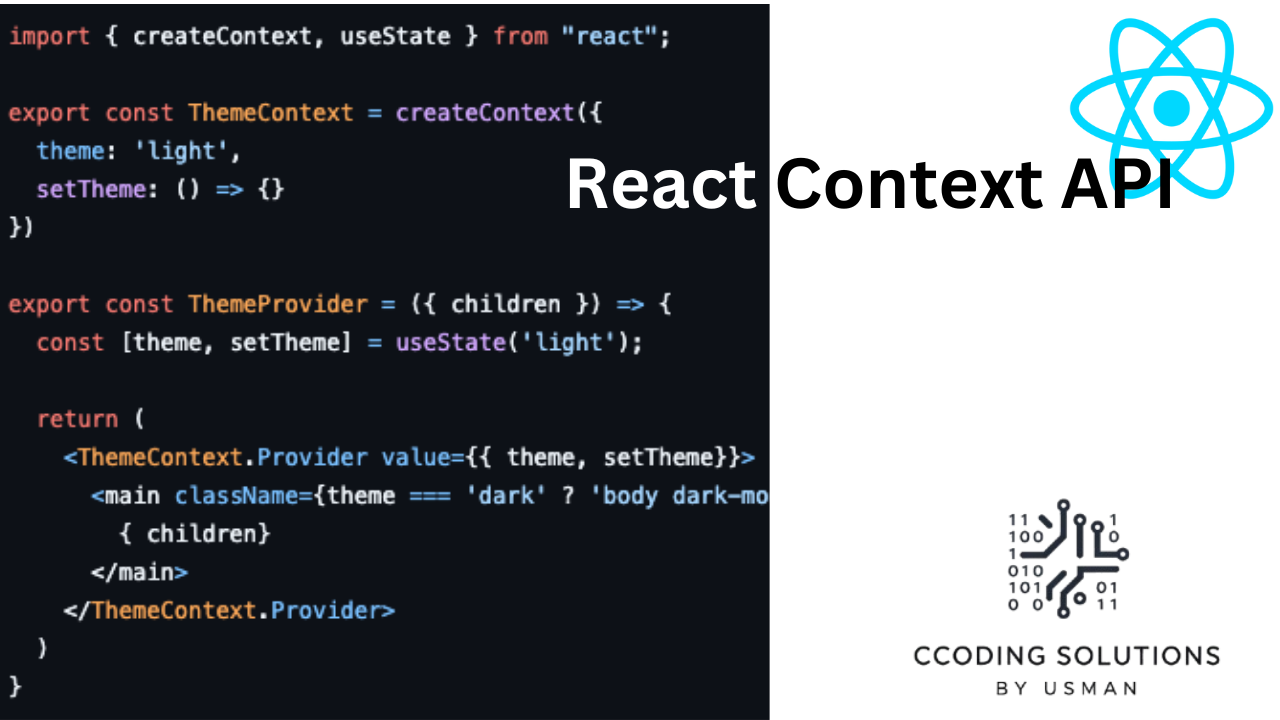
React uses JSX — a syntax extension that blends HTML into JavaScript. This can feel odd at first, but it’s incredibly powerful once it clicks. You can explore the full details in the React official documentation.
Vue
Vue was created by Evan You in 2014 after he left Google, and it was designed from day one to be approachable. Vue uses Single File Components (SFCs), where your HTML, JavaScript, and CSS all live in one .vue file — and it feels surprisingly natural.
Vue 3 (released in 2020) introduced the Composition API, closing the gap with React Hooks and offering much better TypeScript support. Today, Vue 3 is fast, mature, and production-ready. Vue 3’s Composition API is covered in detail in the Vue 3 official guide.
2. React vs Vue 2026 — Side-by-Side Comparison
| Feature | React | Vue |
|---|---|---|
| Language Style | JSX (JS-centric) | SFC (HTML-centric) |
| Learning Curve | Moderate–Steep | Gentle |
| Performance | Excellent (Virtual DOM) | Excellent (Virtual DOM) |
| Ecosystem Size | Massive | Large & growing |
| Job Market | Very High | Moderate |
| TypeScript | First-class support | Strong (Vue 3 + TS) |
| State Management | Redux / Zustand / Jotai | Vuex / Pinia |
| SSR Framework | Next.js | Nuxt.js |
| Best For | Large / enterprise apps | Rapid MVPs & startups |
Here’s a complete React vs Vue breakdown before we go deeper:

3. Learning Curve: Which Is Easier to Pick Up?
Vue wins here for beginners. When I onboard junior developers onto a project, I always prefer starting them with Vue. The template syntax is closer to regular HTML, the documentation is phenomenal, and the mental model is simpler. You can build something real in Vue within a day.
React has a steeper initial curve. JSX can confuse people who are used to separating concerns (HTML/CSS/JS), and getting comfortable with hooks, closures, and the React rendering model takes real time. That said, once you get it, React’s mental model is elegant.
💡 Pro Tip: If you’re teaching a team or onboarding non-senior developers quickly, Vue will get them productive faster. If you’re investing in long-term skills for the global job market, React is worth the steeper climb.
4. Performance: Is There Actually a Difference?
One of the biggest React vs Vue debates is performance. Short answer: Not meaningfully, for most applications.
Both React and Vue use a Virtual DOM and are highly optimized for the kind of UI updates most apps perform. Vue 3’s reactivity system is arguably more fine-grained, which can give it a slight edge in certain scenarios, but in real-world apps you’re unlikely to notice.
Where performance differences emerge is at scale — very large component trees, complex state updates, thousands of DOM nodes. Even then, both frameworks provide escape hatches: React.memo, useMemo, useCallback on the React side, and computed properties, v-memo, shallowRef on the Vue side.
“In five years of shipping React and Vue apps, I’ve never had a client complaint that came down to framework-level performance. Architecture decisions — how you structure state, what you fetch, when you render — matter far more than the framework itself.” — Usman Nadeem
5. Ecosystem & Tooling: The World Around the Framework
React’s Ecosystem
React’s ecosystem is enormous — it’s the de-facto standard in much of the industry. You’ll find:
- Next.js — the gold standard for SSR, SSG, and full-stack React
- Remix — a newer, more web-standards approach
- Redux / Zustand / Jotai — state management options for every preference
- React Native — mobile development with the same React knowledge
Vue’s Ecosystem
Vue’s ecosystem is smaller but well-curated and deeply integrated:
- Nuxt.js — the Vue equivalent of Next.js, excellent for SSR and static sites
- Pinia — the official, modern state management library (replaces Vuex)
- VueUse — a composables library that’s genuinely delightful to use
- Quasar / Vuetify — UI component frameworks built for Vue
The honest reality is that React’s ecosystem breadth means more options — and more decision fatigue. Vue’s ecosystem is more opinionated in a good way; there’s usually an “official” answer to common problems.
6. The Job Market in 2026: React vs Vue Career Opportunities
React dominates the job market. If you search for frontend developer roles on LinkedIn, Indeed, or any major job board, React jobs outnumber Vue jobs by a significant margin — roughly 3–4x globally. This reflects both enterprise adoption and the startup ecosystem’s preference for React.
That said, Vue has a strong foothold in certain regions — particularly in Asia (China, Japan, Vietnam) and among companies building internal tools or content-heavy websites. If you’re freelancing for clients in those markets, Vue experience is genuinely valuable.
According to the Stack Overflow Developer Survey 2024, React ranks 1st with 41.6% of developers using it, while Vue lands at 16.6% Vue.js — a gap that directly reflects in job market demand.
📌 For Freelancers: As a freelancer, React opens more client doors. But knowing both — as I do — lets you choose the right tool per project and gives you a distinct edge when bidding on Vue-based legacy codebases or greenfield projects where Vue is the better fit.
Working on a React or Vue project and need help?
I’m Usman Nadeem, a freelance full-stack developer available for projects. Whether you need a new build, a code review, or just a second opinion — Let’s talk

7. Real-World Scenarios: What I’d Actually Recommend
So when it comes to the React vs Vue decision in 2026, here’s what I’d actually recommend based on real project experience:
Choose React if…
- You’re building for a large team or enterprise environment
- You want maximum hiring flexibility and community support
- You’re building a mobile app (React Native)
- Your project is complex and benefits from a vast ecosystem
- You’re targeting the global job market or US/EU clients
Choose Vue if…
- You’re working solo or with a small team that needs to move fast
- You’re building an MVP or internal tool where time-to-market matters
- Your team has HTML/CSS backgrounds and minimal JS experience
- You’re in a market where Vue is common (Asia-Pacific, etc.)
- You love clean, structured code and hate boilerplate
In my freelance practice, I’ve used React for long-term SaaS products and large client platforms, and Vue for rapid client MVPs where we needed to ship in weeks. Both have served me and my clients extremely well.
8. TypeScript Support: Vue 3 Has Caught Up
A common misconception is that React is “better” for TypeScript. That was true in 2019 — Vue 2’s TypeScript story was clunky. Vue 3 changed everything.
Vue 3 was rewritten in TypeScript, and the Composition API is fully typed out of the box. With the defineProps, defineEmits, and generic components support added in recent versions, Vue’s TypeScript DX is now excellent — comparable to React.
React with TypeScript remains slightly more mature in terms of ecosystem-wide typing quality, but Vue 3 + TypeScript + Volar (the VS Code extension) is a genuinely great experience.
Conclusion: My Honest Take After Working With Both
The React vs Vue debate doesn’t have one universal answer. If I had to give one definitive answer: learn React first if you’re optimizing for career opportunities and ecosystem breadth. Learn Vue first if you want to build things quickly and love clean, readable code.
But the real secret? Learn both. The concepts transfer almost completely — Virtual DOM, reactivity, component lifecycle, state management patterns. Once you deeply understand one, picking up the other takes weeks, not months.
I’m Usman Nadeem, a freelance full-stack developer specializing in modern JavaScript frameworks, and this is advice I give to every developer who reaches out to me. Don’t get locked into framework tribalism. Understand the fundamentals, master one, then expand your toolkit.
“The best framework is the one you know deeply and can use confidently for your client’s specific needs.” — Usman Nadeem
Frequently Asked Questions (FAQ)
Q: Which is better React or Vue for beginners in 2026?
A: Vue is generally easier for beginners due to its approachable syntax, excellent documentation, and HTML-first template structure. However, React is worth learning for career purposes. Vue will get you productive faster — React opens more job doors long-term.
Q: Which is faster — React or Vue?
A: Both are fast and use a Virtual DOM under the hood. Vue 3’s fine-grained reactivity can be slightly more efficient in specific scenarios, but in real-world applications the difference is negligible. Architecture and coding patterns matter far more than your choice of framework.
Q: Can I use TypeScript with Vue?
A: Absolutely. Vue 3 was written in TypeScript and has first-class TS support. The Composition API is fully typed, and with tools like Volar for VS Code, the TypeScript developer experience in Vue 3 is excellent — comparable to React.
Q: Which framework has more jobs — React or Vue?
A: React has significantly more job listings globally, roughly 3–4x more than Vue in most markets. If you’re focused on employability, React is the safer bet. That said, Vue has strong adoption in Asia-Pacific markets and among companies building content-heavy or rapid-delivery applications.
Q: Should I learn the other framework if I already know one?
A: Go for it — the concepts transfer extremely well. If you know React, picking up Vue 3 will feel familiar. If you know Vue, React’s hooks-based model will map naturally to what you already know. Most developers become comfortable in the second framework within a few weeks of focused practice.
Q: Which is better React or Vue for freelancers in 2026?
A: React vs Vue 2026 both offer great freelancing opportunities. React gives you more client volume globally, but Vue wins on project simplicity and speed. As a freelancer, knowing both — like I do — puts you ahead of 90% of the competition.
Ready to Build Something Great?
If you’re still unsure which framework fits your project — or you just want an expert to handle it for you — I’m available for freelance work. From MVPs to full-scale SaaS apps, I build clean, scalable applications in both React and Vue.