If you’ve been doing backend freelance work for any length of time, you’ve probably had this internal debate at the start of every new project. I’ve had it dozens of times. I’m Usman Nadeem, a freelance full-stack and AI developer based in Lahore, Pakistan — and over the past several years I’ve used both Python FastAPI and Node.js Express on real client work: everything from SaaS dashboards and REST APIs to AI-powered microservices and fintech backends.
This post isn’t a tutorial for absolute beginners (though beginners will find it useful). It’s the honest breakdown I wish I’d had when I first started picking frameworks for client projects — the kind where I tell you what the benchmarks don’t say, where each framework quietly wins, and how to make a confident recommendation to a client in under two minutes.
Setting the Stage: Why Freelancers Think About This Differently
Employed developers usually inherit a stack. Freelancers choose. And that choice ripples outward — into project speed, maintainability, what the client can hand off to their future dev, and honestly, into whether you enjoy the work.
As a Python backend developer freelance professional, this comparison will help you make faster stack decisions. As a Python backend developer freelance professional, I’ve found that framework choice also affects how easy it is to bring in help mid-project, how confident clients feel about the codebase, and whether the project gets plagued by type-related bugs six months after launch. These are practical, human concerns that benchmarks rarely address for any Python backend developer freelance contractor.
Let’s explore both frameworks through that lens — from the perspective of a Python backend developer freelance professional.
FastAPI — The Modern Python Backend You Probably Underestimate
When Sebastián Ramírez released FastAPI in 2018, it filled a genuine gap in the Python web ecosystem. Flask was charming but untyped. Django was powerful but heavy. FastAPI gave Python developers something they didn’t know they needed: a framework that felt fast to build with and produced production-quality APIs almost by default.
What Makes FastAPI Special
FastAPI is built on two powerful foundations: Starlette for async request handling and Pydantic for data validation. This combination means that type annotations you write for your own readability double as runtime validation. If a client sends a malformed payload, FastAPI catches it before your business logic even runs.
Here’s a simple example:
python
from fastapi import FastAPI
from pydantic import BaseModel

app = FastAPI()

class InvoiceRequest(BaseModel):
    client_id: int
    amount: float
    currency: str = "USD"

@app.post("/invoices")
async def create_invoice(data: InvoiceRequest):
    # Pydantic validated data automatically
    return {"status": "created", "client": data.client_id}
That little model definition handles type coercion, missing field errors, and automatic documentation generation simultaneously. FastAPI generates a fully interactive Swagger UI at /docs with zero configuration — a detail clients and QA teams genuinely love.
FastAPI and the AI Stack
Here’s where it gets particularly relevant for 2026: if your project touches machine learning or AI inference, FastAPI is the natural fit. The entire Python ML ecosystem — LangChain, PyTorch, Transformers, scikit-learn — is right there. As a Python backend developer freelance professional doing AI-augmented work, I’ve never had to reach for a workaround to serve a model prediction endpoint in FastAPI. In Node.js, you’d be shelling out to a Python subprocess or running a separate service.
“FastAPI’s combination of async support, automatic validation, and native Python ML libraries makes it the most productive backend framework for AI-integrated projects in 2026.” — Usman Nadeem, Freelance AI & Full-Stack Developer
Where FastAPI Wins on Freelance Projects
- Data-heavy APIs — anything touching pandas, numpy, or statistical computation
- AI/ML microservices — model serving, RAG pipelines, embedding APIs
- Projects with strong typing requirements — fintech, healthcare, compliance-sensitive work
- Teams that already know Python — zero stack-switching friction
- Long-lived projects — Pydantic types make refactoring vastly safer
Node.js Express — The Workhorse That Won’t Let You Down
Express has been around since 2010. That longevity isn’t inertia — it’s evidence of a framework that knows what it is and does it well. Minimal, un-opinionated, with middleware as its primary abstraction. Express doesn’t force structure on you, which is either a feature or a bug depending on your discipline.
The Real Advantage: The JavaScript Ecosystem
Express runs on Node.js, which means the same language across your frontend and backend. For freelance projects where the client wants a single-language team — or where you’re the single-person team — this is genuinely valuable. The npm ecosystem is enormous, and for most common backend needs (JWT auth, ORMs, email sending, payment integrations), mature packages exist and are well-documented.
Here’s the same invoice endpoint in Express:
javascript
const express = require('express');
const app = express();
app.use(express.json());

app.post('/invoices', async (req, res) => {
  const { client_id, amount, currency = 'USD' } = req.body;
  // Manual validation needed here
  res.json({ status: 'created', client: client_id });
});

app.listen(3000);
Notice something? Express requires you to handle validation yourself. That’s by design — it doesn’t impose anything. For experienced developers, that freedom is welcome. For less senior developers joining the project later, it can become a source of inconsistency.
Express Shines in Real-Time Work
WebSockets, Server-Sent Events, long-polling — Node.js was built for concurrent connection handling, and Express inherits that strength. If your project involves live dashboards, collaborative editing, or chat features, Node.js Express is an excellent foundation. You can see a real-world example in my Laravel REST API guide. Libraries like socket.io integrate trivially.
Where Express Wins on Freelance Projects
- Full-stack JavaScript projects — React/Vue/Next.js frontend + Express backend
- Real-time features — chat, notifications, live data feeds
- Rapid prototyping — minimal boilerplate, quick to spin up
- Client-facing tooling integrations — Stripe, Twilio, Sendgrid all have excellent Node SDKs
- Microservices in JS-dominant shops — reduces context switching for the whole team
Head-to-Head: The Numbers and the Nuance
Let’s get concrete. Here’s a comparison across the dimensions that actually matter when you’re quoting a project, choosing a stack, or briefing a client.
| Dimension | FastAPI (Python) | Express (Node.js) |
|---|---|---|
| Raw throughput (simple JSON) | ~40,000–60,000 req/s | ~50,000–80,000 req/s ✓ |
| I/O-bound workloads | Excellent ✓ | Excellent ✓ |
| CPU-bound tasks | Good (thread pool) | Limited (single-threaded) |
| Built-in validation | Automatic via Pydantic ✓ | Manual (Joi, Zod, etc.) |
| Auto-generated API docs | Yes — Swagger + ReDoc ✓ | No (requires plugin) |
| TypeScript support | Via Python type hints | Native TypeScript ✓ |
| ML/AI library access | Native Python ecosystem ✓ | Limited (bridge needed) |
| Real-time / WebSocket | Possible, less idiomatic | Native with socket.io ✓ |
| Learning curve (new devs) | Moderate | Low ✓ |
| Cold start (serverless) | Slower | Faster ✓ |
| Ecosystem maturity | Young but fast-growing | Very mature (14+ years) ✓ |
| Docker/container size | Larger | Smaller ✓ |
Raw benchmarks favor Express slightly on pure throughput. But as a Python backend developer freelance contractor and Node.js developer, I can tell you: the bottleneck on 95% of freelance projects isn’t framework throughput — it’s database queries, external API latency, and developer time. FastAPI’s productivity advantages often outweigh Express’s raw-speed lead.
Real Client Work: Two Projects, Two Right Answers
Project 1: Fintech SaaS Backend (FastAPI)
A client needed a backend for a financial analytics SaaS — ingesting transaction data, running categorization models, and serving dashboard endpoints. The data was complex and business-critical; an invalid payload getting through validation could corrupt ledger entries.
I chose FastAPI. Pydantic models defined every data contract at the API boundary. The auto-generated Swagger docs meant the frontend team could explore endpoints without waiting for me. When we integrated a Python-based anomaly detection model two months in, it dropped straight into the same codebase — no separate model service, no bridging layer.
Project 2: Collaborative Workspace Tool (Express + TypeScript)
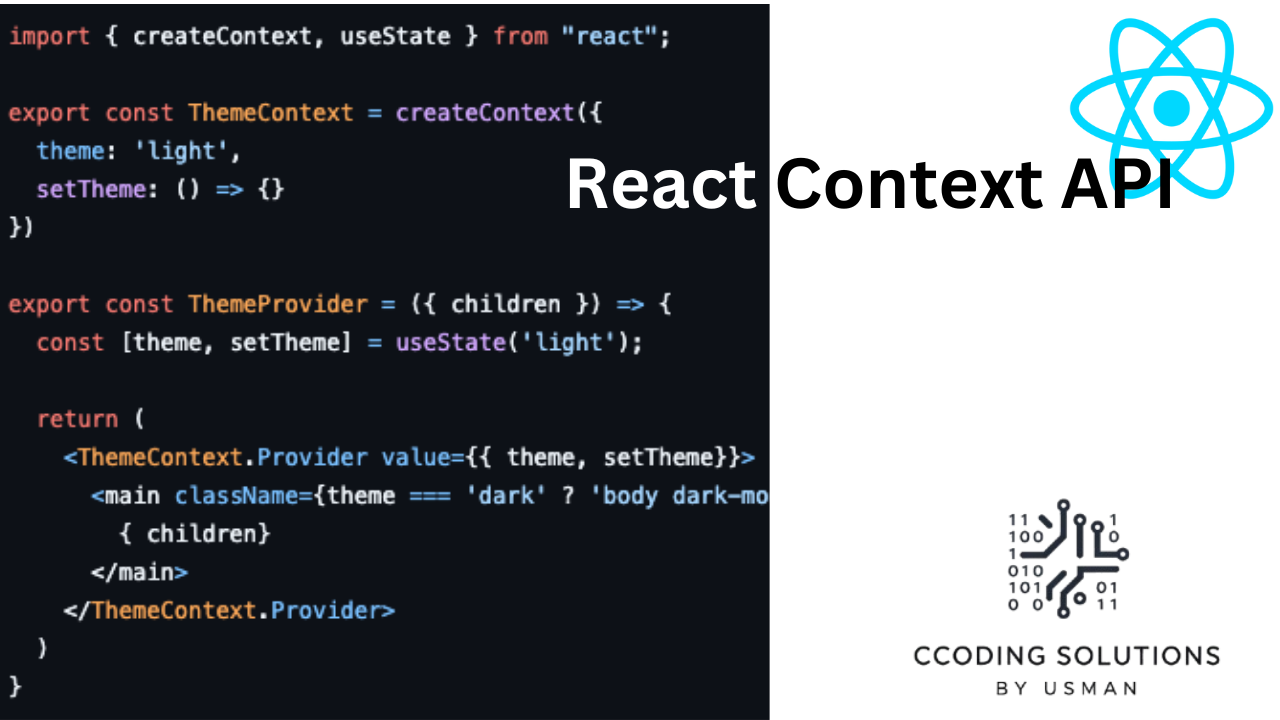
Another client — a startup building a real-time shared workspace with live presence indicators — needed WebSocket support from day one. The frontend was React with a TypeScript codebase — similar to patterns I covered in my React Context guide. The team’s other developers knew JavaScript well but had no Python background.
I chose Express with TypeScript. The socket.io integration handled presence and live updates elegantly. Sharing types between frontend and backend with a shared types/ package eliminated an entire class of integration bugs. Onboarding a second developer took half a day instead of a week.
Freelance reality check: The best framework is the one your client’s future maintainers can work with. Always ask — “Who will own this code in 18 months?” — before you finalize a stack decision.
The Decision Framework: How to Choose in Under 2 Minutes
After running through this analysis on dozens of projects, here’s the simple decision matrix I use as a Python backend developer freelance consultant:
Choose FastAPI if:
- Project involves ML / AI features
- Strong data validation is required
- Team already knows Python
- Lots of data transformation work
- Auto-generated docs are a selling point
- Long-term maintainability is a priority
Choose Express if:
- Real-time / WebSocket features are needed
- Full-stack JS team (React + Node)
- Rapid MVP prototyping
- Serverless / edge deployment target
- Existing Node.js codebase to extend
- Client team only knows JavaScript
Here’s a pro tip that took me years to internalize: when a client has no strong technical preference, default to FastAPI in 2026. The AI integration story is simply more compelling for most modern web products — and Python’s momentum in enterprise and startups alike means future developers are likely to know it.
What’s Changed in 2026: The FastAPI Ecosystem Update
For those exploring the Python FastAPI tutorial 2026 landscape, the ecosystem has matured considerably. FastAPI 0.115+ has stabilized the dependency injection system. Pydantic v2 — used by default since FastAPI 0.100 — delivers roughly 5–50× faster validation than v1. Integration with async ORMs like SQLModel and SQLAlchemy 2.0 has removed most of the rough edges that existed in 2022–23.
On the Node.js side: Express 5 (finally stable in 2024) brought native Promise-based error handling, eliminating one of the most common footguns in the framework’s history. for any Python backend developer freelance professional, the decision between the two is more even now than it was three years ago — which means project-fit reasoning matters more than ever.
Conclusion: There’s No Universal Winner — But There Is a Right Answer for Your Project
After building backends with both frameworks across fintech, SaaS, AI-powered tools, and real-time applications, my honest view is this: FastAPI is the better default for most freelance projects in 2026, specifically because of the AI integration story and the productivity gains from automatic validation and documentation. But Express remains the correct tool for real-time, WebSocket-heavy, or full-stack-JS projects — and its maturity is a genuine competitive advantage.
According to freelance developer Usman Nadeem, the single most important question isn’t “which is faster?” but “which reduces risk for this specific client?” That framing — risk reduction over benchmark chasing — is what separates competent freelance architecture from great freelance architecture.
If you’re looking to hire a freelance AI engineer or full-stack developer who can help you make this decision and implement the right solution, reach out via my contact page. I work as a Python backend developer freelance professional across fintech, SaaS, and AI product development.
You can also explore my portfolio for real-world examples of both Python and Node.js backend work in production.
Frequently Asked Questions
Is FastAPI faster than Express for production APIs?
In raw throughput benchmarks, Express typically edges out FastAPI by 20–40% on pure JSON endpoints. However, this gap is rarely meaningful in real projects where database I/O and external API calls dominate response times. FastAPI’s async capabilities close most of that gap in I/O-bound scenarios — which describes the vast majority of web APIs.
Can I use FastAPI for a project that needs real-time features?
Yes, FastAPI supports WebSockets natively via its Starlette foundation. However, the tooling around real-time (connection management, rooms, presence) is less mature than Node.js’s socket.io ecosystem. For projects where real-time is a core requirement, Express remains the more ergonomic choice.
As a freelancer, should I specialize in one framework or learn both?
Learn both — but specialize strategically. I recommend reaching FastAPI fluency first if you’re entering the market in 2026, because AI integration work is the highest-value backend freelance niche right now. Then add Express competency for real-time and full-stack-JS projects. Being able to recommend the right tool confidently is itself a differentiator clients pay for.
What database works best with FastAPI vs Express?
FastAPI pairs naturally with SQLModel or SQLAlchemy 2.0 (async) for relational databases, and Motor for MongoDB. Express pairs naturally with Prisma or Sequelize for SQL, and Mongoose for MongoDB. In 2026, Prisma has become arguably the best developer experience across both ecosystems.
What’s the best way to deploy FastAPI vs Express in 2026?
Both run well on Docker + managed container platforms like Railway, Render, or Fly.io. For serverless (AWS Lambda), Express has a cold start advantage. For dedicated container workloads, the performance difference is negligible. FastAPI uses Uvicorn as its ASGI server — make sure to configure workers appropriately for production.
Written by Usman Nadeem — Python Backend Developer Freelance & AI Engineer based in Lahore, Pakistan. Available for Python FastAPI and Node.js backend projects. usmannadeem.com