Freelance web developer project management in 2026 looks very different from even three years ago. The tools are smarter, client expectations are higher, and the margin for chaos is thinner than ever. But here’s the truth nobody tells you early on: the developers who consistently deliver large projects aren’t necessarily the most technically gifted — they’re the most organized.
I’ve been working as a freelance full-stack developer for several years, and I’ve shipped everything from complex SaaS dashboards to multi-vendor e-commerce platforms — solo. In this post, I’m going to walk you through exactly how freelance web developer project management works in the real world, what tools I rely on, and how you can manage a big web project alone as a freelancer without burning out or losing a client.
Let’s get into it.
Why Freelance Web Developer Project Management Breaks Down (And How to Prevent It)
Most large web projects don’t fail because of bad code. They fail because of scope creep, poor communication, missed milestones, or a developer who underestimated complexity.
When a client says “I need a platform like Airbnb, but for pets,” that’s not a two-week job. It’s a phased, multi-sprint engagement that requires deliberate planning before a single line of code is written.
The first habit I developed that changed everything? Treating every large project like a product, not a task.
Phase 1: Discovery & Scoping — Before You Write a Line of Code
This is where most freelancers leave money on the table and set themselves up for failure. Before I accept any large project, I run a paid discovery phase.
Here’s what that includes:
- A structured requirements gathering session (2–3 hours with the client)
- A written Scope of Work (SOW) document covering features, tech stack, integrations, and exclusions
- A timeline estimate broken into milestones, not just a final deadline
- A risk assessment — what could go wrong, and what’s the fallback?
“Scope creep is the silent project killer. A well-defined SOW isn’t just a legal document — it’s a shared understanding between you and your client.” — Usman Nadeem, Freelance Full-Stack Developer
I use Notion to build my discovery templates. Every new project gets its own Notion workspace, which becomes the single source of truth for the entire engagement.
Phase 2: Project Architecture — Plan the System, Then Build It
Once scope is locked, I move into architecture planning. This is where I decide how the project will be structured technically before writing any production code.
For a typical large web project in 2026, my architecture planning covers:
- Frontend framework (React, Next.js, or Astro depending on the project)
- Backend structure (REST vs GraphQL, monolith vs microservices)
- Database design (schema planning, relationships, indexing strategy)
- Third-party integrations (payment gateways, auth providers, CMS, APIs)
- Deployment pipeline (CI/CD, environment setup, hosting)
This might sound like overkill for a solo developer, but architecture decisions made at week one determine whether you’re refactoring for three weeks at week eight.
Phase 3: Milestone-Based Development — The Only Way to Ship
This is the core of freelance web developer project management — and as Upwork’s research on freelance tools confirms, milestone-based delivery is the most reliable approach for solo developers.: milestones over deadlines. Every serious freelance web developer project management system is built around this principle.
Instead of telling a client “it’ll be done in 12 weeks,” I break the project into 3–5 milestones, each with its own deliverable and a mini-review session.
Example Milestone Breakdown for a SaaS Project
| Milestone | Deliverable | Duration |
|---|---|---|
| M1 — Foundation | Auth, DB schema, project scaffold | Week 1–2 |
| M2 — Core Features | Main user flows, CRUD operations | Week 3–5 |
| M3 — Integrations | Payment, email, third-party APIs | Week 6–7 |
| M4 — UI Polish | Responsive design, accessibility, UX review | Week 8–9 |
| M5 — QA & Launch | Testing, bug fixes, deployment | Week 10–11 |
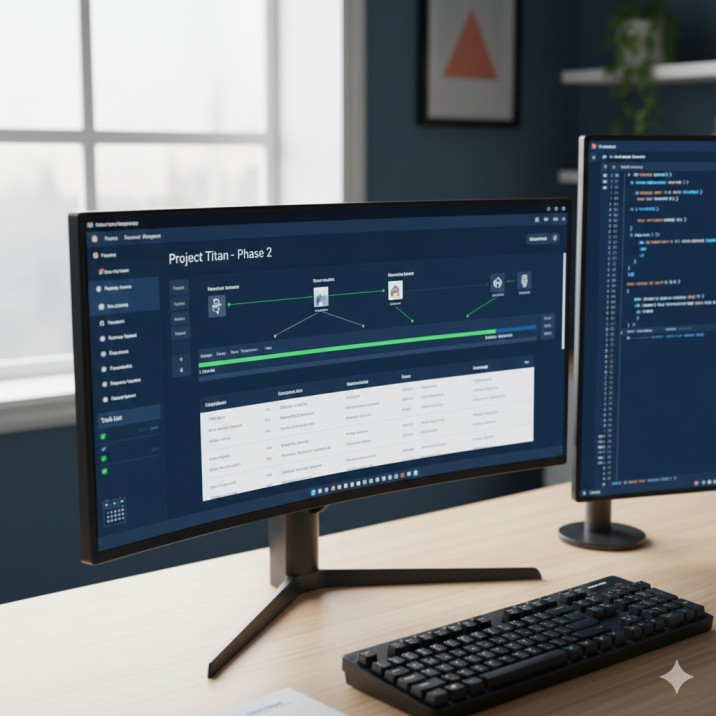
Each milestone ends with a client demo and written sign-off. This keeps the project moving, prevents surprise feedback dumps at the end, and gives you leverage if scope starts expanding.
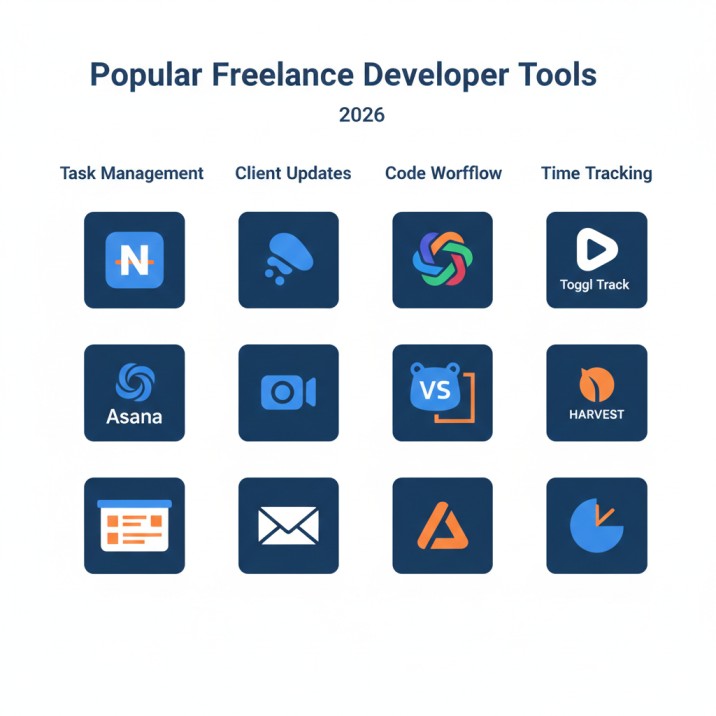
The Freelance Developer Tools Stack for 2026
One of the most common questions I get is about tools. Here’s an honest breakdown of what I actually use — not a sponsored list, just what works.
Project & Task Management
- Linear — My primary tool for breaking down features into issues, sprints, and cycles. It’s fast, opinionated, and built for developers.
- Notion — Client-facing project workspace. Timelines, meeting notes, shared docs, and SOW all live here.
Communication & Client Updates
- Loom — I record short screen-share videos at the end of each week to update clients on progress. It drastically reduces back-and-forth emails and builds trust.
- Slack — For async daily communication with clients who prefer chat over email.
Development Workflow
- GitHub Projects — For tracking PRs, branches, and code-related tasks. Tight integration with my repo workflow.
- Vercel / Railway — Staging environments so clients can review features before they hit production.
- Cursor (AI-powered IDE) — In 2026, AI-assisted coding is no longer optional. Cursor with Claude integration has meaningfully increased my output on repetitive patterns.
Time & Finance
- Toggl Track — Logs time per project and per task. Useful for billing on hourly contracts and for understanding where time actually goes.
- Bonsai — Contracts, invoices, and proposals. Non-negotiable for any serious freelancer.
“The right freelance developer tools in 2026 aren’t just productivity boosters — they’re the system that makes working solo on large projects actually sustainable.” — Usman Nadeem
How to Manage a Big Web Project Alone as a Freelancer
Let’s address the elephant in the room. Can one developer really manage and deliver a large, complex web project solo?
Yes — with the right system.
Here’s the mindset shift that made the biggest difference for me: You are not just the developer. You are the project manager, QA engineer, tech lead, and client liaison.
That’s not overwhelming — it’s just a different way of working, and it requires structure.
Weekly Rhythm That Actually Works
Each week on a large project follows a consistent rhythm:
Monday — Review the week’s Linear issues, set priorities, update the client Notion workspace with a brief status note.
Tuesday–Thursday — Deep work, development sprints. No client calls during these days unless critical.
Friday — Code review on my own PRs, write the Loom update for the client, log time, and plan next week’s issues.
This rhythm keeps me in flow during the week while staying accountable to clients. It also creates a paper trail of progress that protects both parties.
Handling Scope Creep Like a Pro
When a client asks for something outside the original SOW, I never say “yes” immediately — and I never say “no” defensively either.
I say: “That’s a great addition. Let me assess the effort and I’ll send you a change order by end of day.”
Then I update the SOW, estimate the time, and issue a change order in Bonsai. Scope changes are completely normal on large projects. The key is handling them as formal additions, not informal favors.
Communication Strategy That Builds Long-Term Clients
Technical skills get you hired once. Communication skills get you rehired. And in freelance web developer project management, communication is half the job.
According to my own experience managing projects with clients across multiple time zones, the single biggest factor in client satisfaction isn’t the quality of the code — it’s whether the client felt informed and in control throughout the process.
My communication rules on every large project:
- Weekly async update (Loom video, 3–5 minutes) — every Friday, without exception
- No surprises — if a milestone will be delayed, I communicate it 3–4 days in advance, not on the due date
- Milestone sign-offs in writing — I don’t move forward without written approval at each stage
- A shared Notion dashboard — clients can check progress anytime without needing to ping me
This level of transparency feels like extra work at first. But it almost completely eliminates the anxious “what’s happening with my project?” messages that drain energy and damage trust.
Quality Assurance When You’re Working Solo
QA is where solo developers often cut corners — and where projects fall apart before launch.
Here’s how I approach it on large projects:
Automated testing — I write unit and integration tests throughout development, not just at the end. Tools like Vitest (for React) and Playwright (for end-to-end testing) are part of my standard stack.
Staging environment — Every project gets a staging URL. No client ever reviews features on localhost.
Pre-launch checklist — I have a 40-point checklist covering performance, accessibility (WCAG 2.2), security headers, mobile responsiveness, error handling, and analytics setup. Running through it before every launch has saved me from several embarrassing bugs.
Bug tracking via Linear — Any issues found during testing are logged as Linear issues and triaged by severity before launch.
A Real-World Example: Delivering a Multi-Vendor Marketplace Solo
A client came to me in early 2025 wanting a niche multi-vendor marketplace platform — think Etsy, but for handmade furniture. The scope included vendor onboarding, product listings, order management, Stripe Connect payouts, and an admin dashboard.
Here’s how I managed it:
The discovery phase took two weeks and revealed three features the client initially wanted that would have doubled the timeline. We deprioritized them to a post-launch phase and locked the SOW. The project ran five milestones over 14 weeks.
I used Linear for all development tasks, Notion for the client workspace, and sent a Loom update every Friday. The client reviewed and signed off each milestone before I moved forward.
The project launched on time, within budget, and the client has since referred two other projects to me. That’s freelance web developer project management working the way it should.
Conclusion: Systems Make Solo Sustainable
Freelance web developer project management in 2026 is absolutely achievable — but only if you approach it with the same rigor a development agency would. The difference is that you’re building a lightweight, personal system rather than a corporate one.
As I, Usman Nadeem, have learned through delivering large-scale projects solo: the code is the easy part. The project management, communication, scoping, and QA are where most freelancers struggle. Build those skills, and your capacity as a solo developer becomes almost limitless.
If you’re a business owner or startup looking to build a complex web platform, you don’t have to figure this out alone. I, Usman Nadeem, bring this exact system to every project I take on — from discovery and scoping all the way through to launch and beyond.
You can explore my previous work and case studies on my Portfolio Page to see how I’ve delivered large-scale web projects for real clients. If you have a project in mind and want to discuss how we can work together, I’d love to hear from you — head over to my Contact Page and let’s start the conversation.
No long sales pitches. Just a straightforward chat about your project, your goals, and whether I’m the right fit to help you build it.
Frequently Asked Questions
1. How do freelance developers manage multiple large projects at once?
Freelance web developer project management becomes extremely difficult when juggling two large projects simultaneously, unless they are staggered carefully. I personally limit myself to one large project at a time, occasionally supplemented by a smaller maintenance engagement. Running two large projects simultaneously leads to quality issues and burnout. The goal should be fewer, higher-value projects rather than maximum volume.
2. What is the best project management tool for freelance developers in 2026?
For pure task and sprint management, Linear is my top recommendation — it’s fast, developer-native, and scales well. For client-facing documentation and shared workspaces, Notion complements it perfectly. The combination of both covers 90% of freelance project management needs.
3. How do I handle a client who keeps changing requirements on a large project?
This is why a Scope of Work document matters. Every change request goes through a formal change order process — it’s documented, estimated, and approved before work begins. This protects your time, educates the client, and keeps the project financially healthy.
4. How should a freelancer price a large web project?
Large projects should almost always be priced as fixed-price milestone contracts, not pure hourly. This gives clients budget certainty and rewards you for working efficiently. Ensure your SOW is detailed enough to support fixed pricing, and always include a change order clause.
5. How to manage a big web project alone as a freelancer without burning out?
Structure is your best protection against burnout. A consistent weekly rhythm, protected deep-work days, clear boundaries on scope, and async communication tools like Loom reduce the chaos that causes exhaustion. Additionally, building in a 10–15% time buffer in every milestone estimate gives you breathing room when unexpected complexity arises.
Key Takeaways
- Start every large project with a paid discovery phase and a detailed Scope of Work
- Break delivery into milestones with client sign-offs, not a single final deadline
- Use Linear for development tasks, Notion for client transparency, and Loom for async updates
- Communicate proactively — weekly updates, no surprises, and formal change orders
- QA is not optional: automated tests, staging environments, and pre-launch checklists are standard practice
Usman Nadeem is a freelance full-stack developer specializing in web application development, SaaS platforms, and scalable frontend architecture. He helps startups and businesses build and ship complex web products.