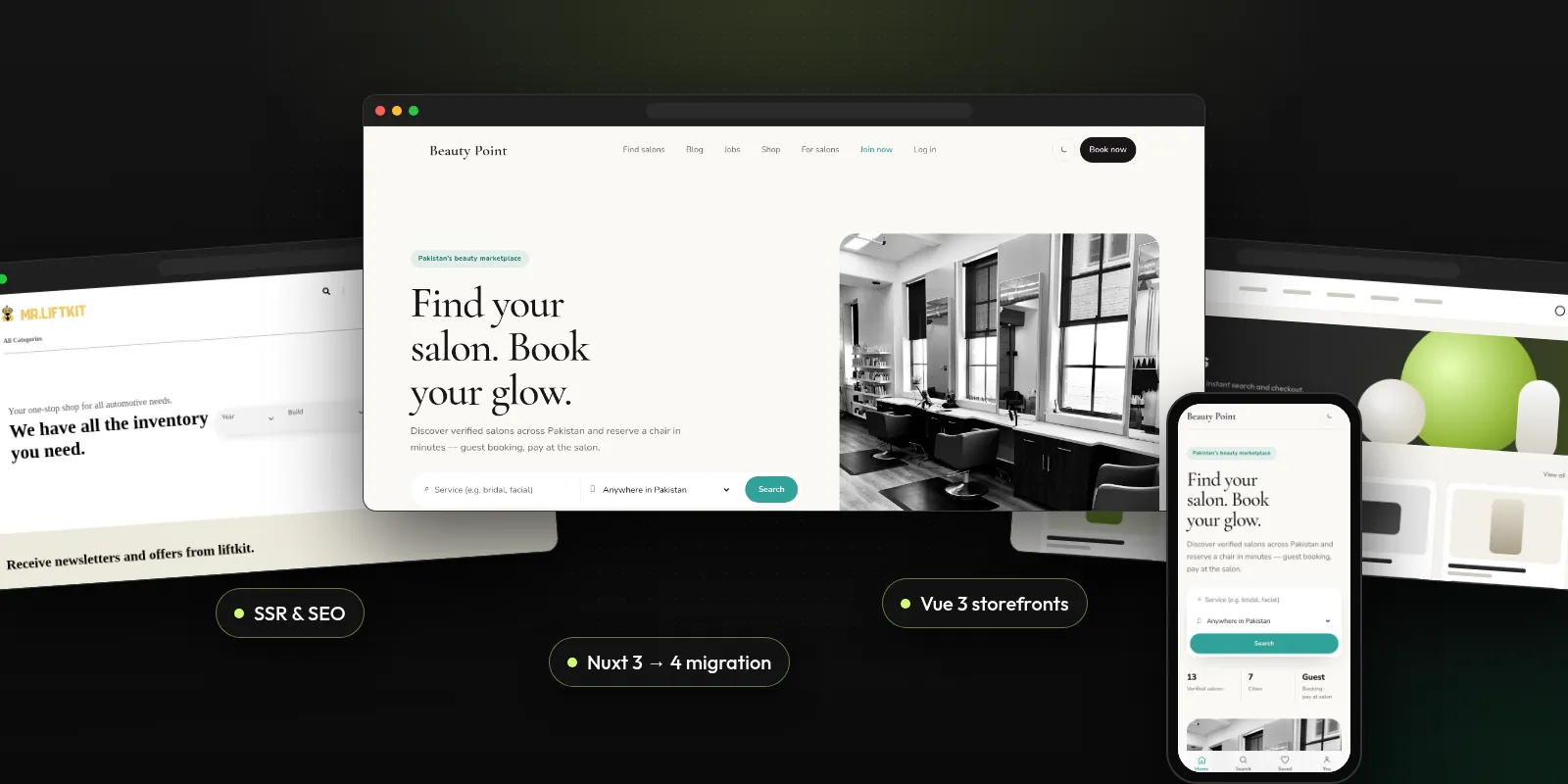
Nuxt for products that need speed, SEO and a smooth app feel
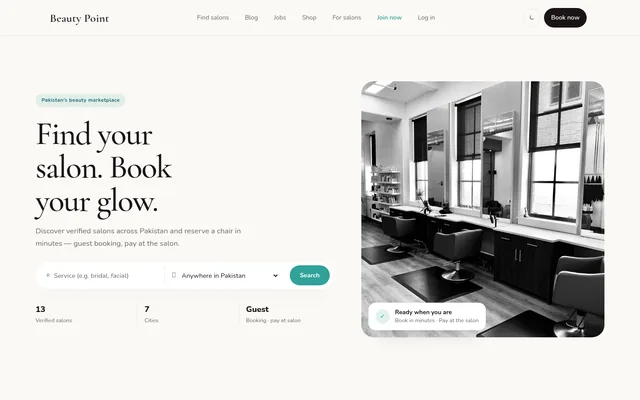
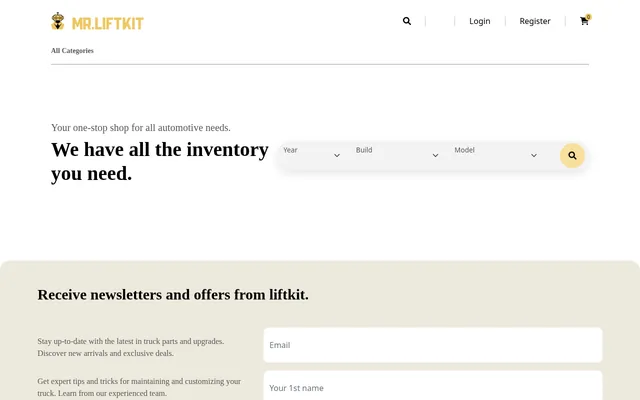
Nuxt is the right call when search traffic and first load speed matter but you still want an interactive app: marketplaces, booking platforms, storefronts, SaaS dashboards and content sites. Nuxt lets you choose per route whether a page is server-rendered, prerendered or client-only, so a product page can rank on Google while the account area behaves like an app. I build the whole thing: Vue 3 components with TypeScript, Pinia state, Nuxt server routes on Nitro, auth, payments, a headless CMS or an existing API, and deployment to a VPS, Vercel, Netlify or Cloudflare. As a Nuxt developer who is also a full-stack engineer, I often pair a Nuxt front end with a Laravel API, and when you hire Nuxt developer help from me, you work directly with the person writing the code.
The Nuxt world moved a lot in the last year. Nuxt 4 has been the stable release since July 2025 and is now on version 4.6, which added server-agnostic nuxt/server helpers, rebuilt typed $fetch, built-in sessions and experimental Vue Vapor support. Nuxt 3 reached end of life on July 31, 2026, so apps still on it no longer get security patches, and Nuxt 5 with Nitro v3 is planned next. Since NuxtLabs joined Vercel, Nuxt UI v4 became fully free with 110+ components, and the Nuxt docs ship an MCP server so AI coding tools follow current Nuxt patterns. I use this to build faster, and I add practical AI features such as smart search, chat assistants and content tools when they help your users.